
Unless you have been living under a rock, you’ve been bombarded by people talking about and pushing the use of AI (artificial intelligence). It’s literally everywhere. Now, some individuals think AI will take over jobs and eventually the world, while others believe it’s an excellent tool for productivity.
I’m somewhere in the middle.
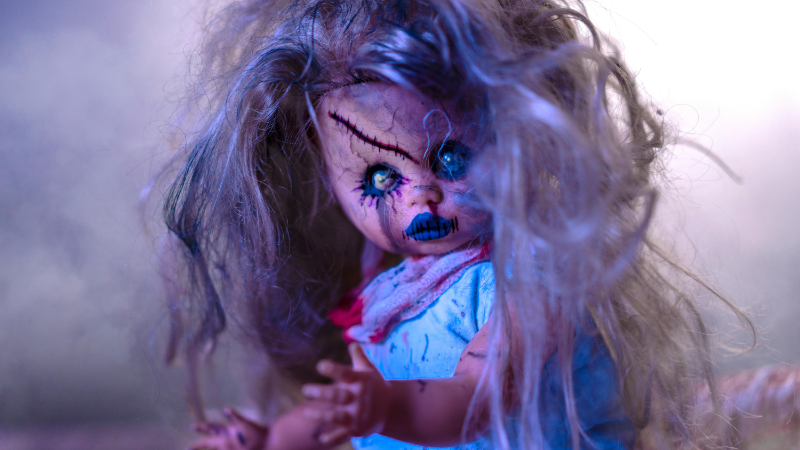
However, I must be honest: I’ve been using AI at work and at home a lot lately, and it’s starting to give me an uneasy feeling. And I thought I would try an experiment: I asked Grok to write me a short horror story about a babysitter and a ghost. Here is the story it created—without any alterations whatsoever. . . . Are writers doomed?
What do you think?
+++
The old Victorian house on Elm Street creaked like it was alive, its wooden bones settling under the weight of decades. Emily, a 17-year-old with a ponytail and a nervous habit of twisting her ring, had taken the babysitting gig for easy cash. The parents, Mr. and Mrs. Harlow, were out for a late dinner, leaving her with little Tommy, who was tucked into his bed upstairs, his soft snores filtering down through the baby monitor.
The living room was dimly lit by a single lamp, casting long shadows that danced like fingers across the floral wallpaper. Emily scrolled through her phone, trying to ignore the chill that seeped into the air despite the humming radiator. It started small—a faint whisper, like wind through a crack, but there were no open windows. She paused, heart skipping, and glanced at the monitor. Tommy was still asleep.
Then came the footsteps. Soft, deliberate pads on the hardwood floor above, pacing back and forth in the hallway outside Tommy’s room. Emily froze, her breath catching. The Harlows had mentioned the house was “quirky,” but not this. She tiptoed to the stairs, the banister cold as ice under her palm. “Tommy?” she called softly. No answer. The footsteps stopped abruptly, as if whatever made them had heard her.
Back in the living room, she tried to shake it off, sinking into the couch. But the TV flickered on by itself, static hissing like angry whispers. Faces seemed to form in the snow—pale, hollow-eyed, gone in a blink. Emily jabbed the power button, but it wouldn’t turn off. A child’s giggle echoed from the kitchen, high and innocent, yet wrong, like it was played backward.
Her phone buzzed—a text from an unknown number: “He’s not alone.” She dropped it, hands trembling. The air grew thicker, heavier, and she smelled it then: the faint rot of decay, like wet earth after a burial. Something brushed her ankle, cold and clammy, slithering away when she looked down. Nothing there but the rug, now rumpled as if small hands had tugged it.
Upstairs, Tommy’s door creaked open on its own. Emily bolted up the stairs, pulse thundering. The hallway was darker than it should be, the lightbulbs dimming to a sickly yellow. Tommy’s bed was empty, sheets twisted. Panic clawed at her throat. “Tommy!” she screamed, racing to the closet. Inside, he huddled, wide-eyed, pointing at the corner. “The lady,” he whispered. “She wants to play.”
Emily spun. In the mirror across the room, a reflection that wasn’t hers stared back—a woman in a tattered nightgown, skin pale as bone, eyes black voids. Her lips moved silently: “Stay with us.” The door slammed shut, locking with a click that echoed like a coffin nail. Emily pounded on it, screams swallowed by the house’s hungry silence. Outside, the Harlows’ car pulled up, headlights cutting through the night. But inside, the whispers grew louder, promising Emily she’d never leave alone.